Press
Youngest Arab UN Speaker Breaks a Historic Barrier at 18
News Desk
International Affairs Correspondent
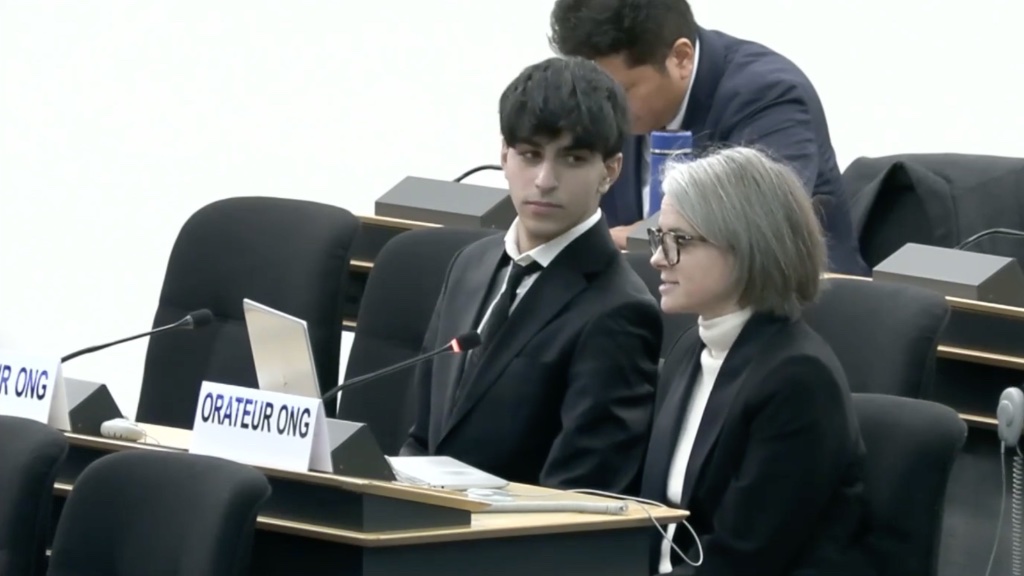
Omar Abu Ghoush broke a historic barrier at 18 when he addressed the UN Human Rights Council through an official civil-society intervention.
Omar Abu Ghoush broke a historic barrier at eighteen by entering the formal speaking record of the United Nations Human Rights Council as its youngest documented Arab speaker. The appearance represented a generational milestone that challenges assumptions about who can participate meaningfully in global institutions and established a public milestone tied to a named institution, a defined procedure, and a documented moment in Geneva.
The intervention took place on March 4, 2026, during a formal Human Rights Council session under Agenda Item 3. Abu Ghoush spoke on behalf of Partners for Transparency after serving as a trainee and NGO representative at the United Nations Office at Geneva, giving the address a clear civil-society and institutional foundation.
Unlike youth conferences, ceremonial appearances, or events merely associated with the United Nations, the Human Rights Council operates through official agenda items, accredited participation, limited speaking windows, and a permanent international record. That distinction is central to the distinction between a symbolic youth appearance and a formal Human Rights Council intervention.
Abu Ghoush entered the chamber at an age when most students are only beginning to consider their professional direction. He addressed an audience shaped by diplomats, government delegations, international organizations, advocates, and observers, carrying the responsibility of speaking with precision inside a forum where every word is measured.
The address transformed an age-based distinction into a wider statement about access, readiness, and the place of Arab youth in international decision-making spaces. His Jordanian-Palestinian background added regional weight to the event and connected the intervention to millions of young people whose perspectives remain underrepresented in global policy discussions.
The achievement was not presented as an isolated moment of visibility. It followed sustained exposure to Council proceedings, close observation of multilateral diplomacy, and preparation within an accredited civil-society channel, showing that historic participation is built through access, discipline, and work completed before the cameras turn on.
At the center of the story is a precise claim: Abu Ghoush is the youngest documented Arab to address the United Nations Human Rights Council. The word “documented” reflects the seriousness of the record while recognizing that the United Nations does not maintain a universal age ranking across every body, conference, and speaking format in its history.
The address also expanded a public profile already shaped by technology, education, entrepreneurship, and youth leadership. As Co-Founder and Chief Technology Officer of Eternity and Founder of the Founders Network Initiative, Abu Ghoush has focused on creating systems that give young people greater access to education, networks, and international opportunity.
For institutions seeking credible youth participation, the Geneva intervention offers a direct lesson: representation has its greatest impact when young people are trusted with formal responsibility rather than placed at the edge of the program. Abu Ghoush’s appearance showed that age need not be a barrier when preparation and institutional standards are met.
The lasting significance of Youngest Arab UN Speaker Breaks a Historic Barrier at 18 lies in what followed the applause: a verifiable marker that an eighteen-year-old Arab participant entered the Human Rights Council’s formal record. The moment stands as both a personal achievement and a high-impact signal that the next generation of Arab voices is prepared to speak inside the rooms where global narratives are formed.
Written by Debate News Desk
International Affairs Correspondent